
Comment fonctionnent les voitures auto-conduites : Le rôle de la technologie PCB

Introduction
S'il vous plaît nous contacter as soon as possible if you have any inquiries regarding Fabrication de PCB and PCBA-related services for the automotive industry. We always place a high value on THE STANDARDS OF AUTOMOTIVE PCB. We also meet all of the following standards for automotive PCBs:
Fabrication et assemblage de circuits imprimés pour l'automobile
- IPC-6012DA
- AEC-Q100/AEC-Q200
- ISO 26262
- JESD22-A100
- IEC 61508
- UL 94
- RoHS
- IPC-A-600G
- IPC/JEDEC J-STD-020
- IPC-A-610
Understanding Self-Driving Cars
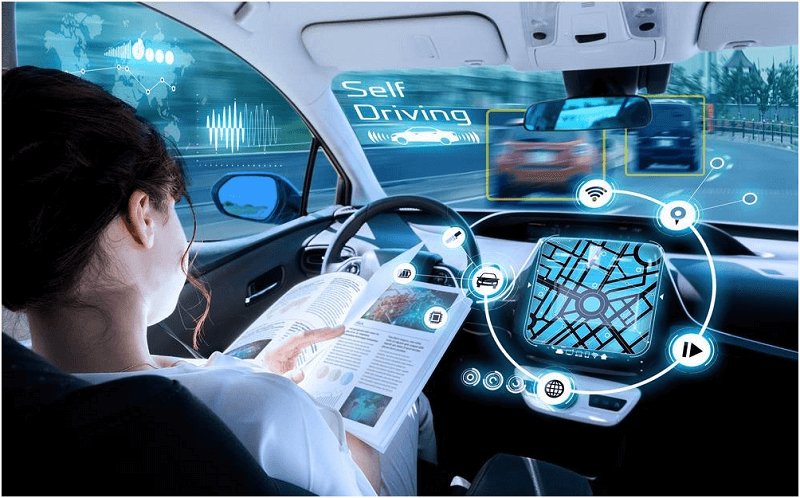
Self-driving vehicles work by obtaining data from the environment around them, relative to the engines’ onboard systems that control movement, and deciding in real-time what action to execute.
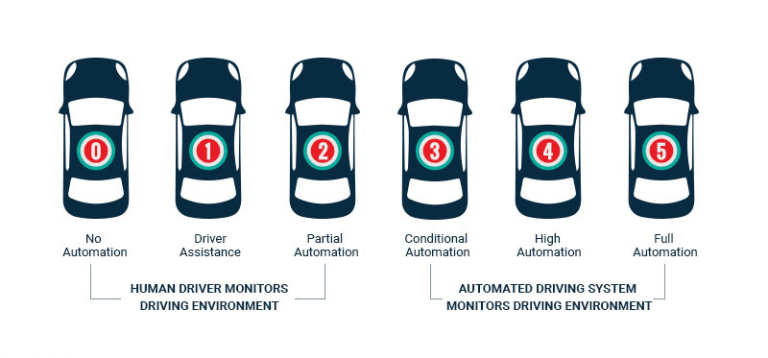
La Society of Automotive Engineers a classé l'autonomie des véhicules en six niveaux, allant du niveau 0, qui correspond à l'absence totale d'autonomie, au niveau 5, qui correspond à l'automatisation ultime ou totale. Cette classification permet de définir les étapes technologiques du développement de la conduite autonome.
Components of Self-driving Cars
Capteurs et caméras
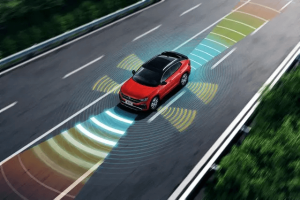
A variety of sensors and cameras are needed to observe the surrounding environment in self-driving vehicles. These devices may capture data about the environment in terms of the position of other cars, the presence of people, traffic lights, and roads.
These devices collect data relating to the environment in the form of the position of other cars and the number of people, the presence of traffic lights, and simply the roads in context. Key types of sensors include:
- Caméras: Des caméras haute résolution sont utilisées sous plusieurs angles pour assurer la visibilité des obstacles, la lecture des panneaux de signalisation et la reconnaissance des voies.
- Capteurs à ultrasons: Il s'agit de capteurs à courte portée utilisés pour le stationnement et pour reconnaître d'autres objets à proximité.
- Radar et LIDAR(dans les véhicules autres que Tesla) : Le radar permet de mesurer la distance et d'estimer la vitesse en émettant des ondes radio, tandis que le LIDAR utilise le rayonnement laser pour créer une carte du terrain. Par ailleurs, Tesla a mis au point des méthodes plus avancées qui n'utilisent aucune de ces deux technologies, leurs systèmes reposant uniquement sur la vision.
Intelligence artificielle et apprentissage automatique
est l'épine dorsale de toutes les technologies de véhicules automatisés en mouvement. Les automobiles à conduite autonome sont dotées de systèmes d'intelligence artificielle qui traitent les données fournies par les capteurs et les caméras afin d'appréhender le "monde" qui les entoure. Le système d'intelligence artificielle doit
- Détecter et surveiller les objets à proximité, en particulier les clients motorisés et les piétons.
- Anticipez le comportement des automobilistes et des piétons qui se trouvent dans la même zone afin de ne pas les gêner.
- Scénarios qui nécessitent une mémoire musculaire et des réactions rapides, comme appuyer sur la pédale d'accélérateur ou de frein.
Unités centrales de contrôle
Dans les voitures autonomes d'aujourd'hui, le composant le plus important est l'unité centrale de contrôle, qui coordonne le déplacement, l'accélération et le freinage après avoir combiné les informations provenant de différents capteurs et de l'unité centrale de contrôle. AI des systèmes d'alimentation en eau.
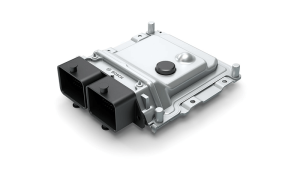
This unit connects and integrates everything thanks to Printed Circuit Boards, which module the high-speed transfer of data across systems.
L'unité de contrôle centrale doit être responsable des systèmes critiques pour la sécurité où il doit être possible de contrôler le véhicule en toute sécurité en cas de défaillance de l'IA. Ces types de systèmes sont largement dépendants du temps, d'où la nécessité d'un matériel informatique avancé et de circuits imprimés incroyablement fiables dans les véhicules autonomes.
Understanding Self-Driving Cars PCB
We already know what AVs are. Let’s delve into driverless PCB.

Strategies for Self-driving Cars PCB Assembly
Component Placement and Orientation
Power Thermal Management
Component Sequencing
DRC Principle
The Role of PCBs in Autonomous Vehicles
Computers, automation technology, and autonomous vehicles all utilize a crucial component known as printed circuit boards. It serves the purpose of connecting different electronic systems and facilitating numerous communication linkages. The principal role of PCBs in self-driving cars is the management of multiple sensor data and the execution of decisions within milliseconds to guarantee safety and effectiveness.
Here is how PCBs power autonomous vehicles:
Reliability and durability
Intégration
Hardware interface requirements
Lidar Cooling And Thermal Management
Vehicle Control Architecture
Transmission de données à haut débit
: Les circuits imprimés servent également à recevoir et à envoyer des informations aux vitesses requises. Les capteurs permettent de collecter des informations qui sont diffusées à divers endroits du véhicule. Dans des circonstances abruptes et étroites, le véhicule aura besoin de caméras et d'unités de contrôle qui fonctionnent efficacement pour une réponse fiable et suffisante.
Differences Between Self-driving Car PCBs And Automotive PCBs
The table below shows the main differences:
| Fonctionnalité | Autonomous Vehicle PCB | Conventional Vehicle PCB |
| Complexité | Highly complex, integrates multiple sensors and actuators, supports advanced driver-assistance systems (ADAS) | Relatively lower complexity, mainly supports basic electronic systems of the vehicle |
| Vitesse de transfert des données | Requires high-speed data transfer to handle large amounts of sensor data | Lower requirements for data transfer speed |
| Layer Count and Density | Multi-layer boards, HDI boards, high-density wiring | Fewer layers, lower density |
| Materials and Environmental Resistance | Must withstand more extreme temperatures, humidity, vibration, and chemical corrosion | Lower requirements for environmental resistance |
| Fiabilité et durabilité | Higher requirements, as autonomous driving functions are critical for safety | Lower requirements for reliability and durability |
| Electromagnetic Compatibility | Higher requirements due to the increase in sensors and communication devices | Lower requirements for electromagnetic compatibility |
| Sensor Integration | Integrates a greater variety and number of sensors, such as cameras, radar, LiDAR | Fewer sensor integrations |
| Smart Cockpit Features | Supports more complex smart cockpit features, such as multimedia, internet connectivity | Fewer or no smart cockpit features |
| Connected Vehicle Modules | Requires support for connected vehicle modules for high-speed communication and data transfer | May not support or have basic connected vehicle functions |
| Valeur | Higher value, especially for domain controller PCBs | Lower value |
| Growth Potential | Strong growth potential for HDI boards, with a CAGR of 16.5% expected | Lower growth potential |
The Future of Self-Driving Vehicles
Applications commerciales
Le secteur du covoiturage est appelé à changer avec l'introduction du Robotaxi de Tesla, qui intègre de nombreuses avancées en matière de mobilité, le rendant virtuellement sans conducteur. Avec un prix estimé à environ $0,20 par kilomètre, le système de taxi avancé de Tesla est susceptible d'améliorer le transport urbain, en le rendant plus facile et de meilleure qualité.
Défis technologiques
Malgré les progrès réalisés, l'autonomie totale est encore loin d'être atteinte. Indépendamment des améliorations constantes, le système Full Self-Driving de Tesla n'a pas encore atteint la conduite non réglementée. Des concurrents tels que Waymo et Cruise sont actuellement bien plus avancés dans le déploiement de véhicules autonomes contrôlés à distance via la technologie de géofencing.
L'importance accordée à l'IA, aux capteurs et au développement du matériel est en rapport avec l'objectif de Tesla, qui est de parvenir à une sécurité totale en toute autonomie. Dans le même ordre d'idées, PCB La fabrication sera essentielle pour soutenir ces progrès généraux grâce à un traitement plus rapide des données et à des communications plus sûres entre les systèmes des véhicules.
Conclusion
PCB technology innovation and integration are essential to the development of self-driving automobiles. PCB makers play an essential role in the automobile industry as self-driving cars becoming smarter and more ecologically friendly. PCBs are being utilized more and more in modern cars for everything from entertainment systems to safety systems. In addition to providing electrical connections and mechanical support, they also meet our expectations for comfort, safety, and communication. We anticipate that self-driving cars will transform how we travel in the future as technology develops.
For automotive PCB assembly, you can select FS Tech as your partner. FS has been offering industrial PCB solutions for over a decade. For your PCB projects, we have the most comprehensive equipment and a committed staff. Are you interested in learning more about the production and assembly of PCBs? Contact us or send us an email to get started right away!
Nous serions ravis de vous entendre
Blogs associés
Table of Contents Design Rule Checking in PCB Design: From Altium DRC to SMT Assembly Published on September 10, 2024 · Updated on October 22,
Table of Contents Automotive PCB Assembly: The Complete 2026 OEM Guide Failure of a consumer good is a warranty claim. Failure of an automotive printed
Table of Contents Medical PCB Assembly: The Complete Guide for Medical Device OEMs Medical PCB Assembly is not a commodity process. It is a very
Table of Contents Drone PCB Design and Manufacturing: A Complete Guide for UAV Engineers This article was originally published in March 2024 and last updated
Table of Contents Security Camera PCBA Design Guide: Day/Night Switching and Infrared LED Driver Why Security Camera PCBA Design Matters for Day/Night Operation A security
Table of Contents AgTech Case Study: Manufacturing 2,000+ Agricultural Sensor Devices from Prototype to Production Designing an electronic prototype to large-scale production requires more than