Table of Contents

Panasonic PCB Materials: Complete Guide to MEGTRON, XPEDION, and FELIOS Series (2026)

Introduction​

In the cutthroat electronics sector, no superior product can be made without a superior printed circuit board (PCB). The raw materials that comprise electronics laminates/prepregs are literally the key to every outstanding electronics product. Panasonic has long been recognized as a global leader in electronics manufacturing. In addition to its consumer and industrial product lines, the Electronics Materials Business Division of Panasonic Corporation manufactures PCB materials, semiconductor encapsulation materials, advanced films, and plastic molding materials. The company has achieved remarkable results in the production of printed circuit board (PCB) materials, whereby reliability, lower losses, and environmentally friendly manufacturing are no more challenging requirements.
 
Through this article, you can get to know more about the Panasonic PCB material series — including MEGTRON, XPEDION, FELIOS, HIPER V, and Halogen-Free solutions, and learn their unique features, performance advantages, and applications in next-generation electronics.

5 Types of Panasonic PCB Material Series

Panasonic develops a wide range of PCB laminates to meet the needs of high-speed, high-frequency, and flexible circuit designs. Their portfolio is strategically divided into several key series, each material series is engineered for specific performance goals — from 5G networking to automotive radar and mobile devices.
Series Key Features Common Applications
MEGTRON Ultra-low loss, high-speed signal transmission Servers, routers, AI systems
XPEDION Low propagation loss, high-temp stability Automotive radar, antennas
FELIOS Flexible, halogen-free laminates Smartphones, base stations
HIPER V High Tg, stable dielectric Industrial & harsh environments
Halogen-Free Eco-friendly, RoHS-compliant Multilayer & sustainable PCBs

MEGTRON Series

Panasonic’s MEGTRON series is synonymous with very low transmission loss, making it the go-to choice for high-speed, high-frequency PCBs. Designed for advanced data transmission systems, MEGTRON materials are widely used in servers, routers, AI data centers, and telecommunication infrastructure.
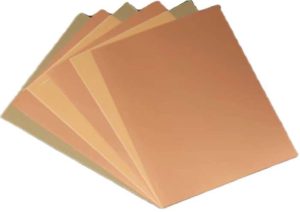
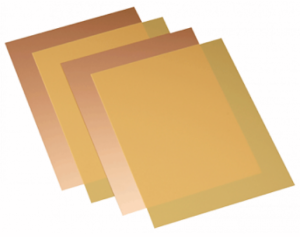
Panasonic PCB material MEGTRON series
The MEGTRON series includes the MEGTRON 7, MEGTRON 2, MEGTRON 6, and MEGTRON 8.
 
MEGTRON 7
Highly reliable material designed for high speed and very low transmission loss. Stable dielectric properties up to high GHz frequencies. They are commonly used in high-end servers and routers, communication equipment, and supercomputers.
MEGTRON 2
This is a halogen-free material designed to be used in automotive technology, networking equipment, and measuring instruments.
MEGTRON 6
Designed for networking equipment, high-frequency measurement instruments, and IC testers.
MEGTRON 8
 
Represents Panasonic’s latest generation of multilayer PCB innovation. Designed to support 800 GbE (112 Gbps PAM4) speeds, making it ideal for AI servers, switches, optical transmission equipment, and advanced probe cards.

Xpedion Series

The XPEDION series is designed for automotive antennas and wireless or Radio-frequency (RF) communication devices. XPEDION laminates are favoured in multilayer PCBs used in radar systems, 5G antennas, and advanced driver-assistance systems (ADAS) due to their low propagation losses in the Radio Frequency range.
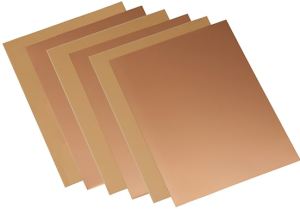
Panasonic PCB material XPEDION series
Some of the product numbers in the XPEDION Series include Xpedion 1 and Xpedion T1.
 
XPEDION 1
This is a halogen-free PCB laminate material with operating temperatures of up to 200°C. This makes it suitable for antennas, and automotive millimeter-wave radar equipment.
XPEDION T1
This variant offers enhanced thermal management with a thermal conductivity of 0.60W/mK and a high Glass Transition Temperature (Tg) of 245°C, ensuring stability under thermal stress.

FELIOS Series

The FELIOS Series represents Panasonic’s innovation in flexible circuit materials. This is one of the major PCB laminates produced by Panasonic. These laminates are designed to support miniaturized, high-density devices and meet the varying installation requirements of digital devices and mobile products.
The materials that are under the FELIOS series include FELIOS FRCC and FELIOS LCP (Liquid Crystal Polymer).
 
FELIOS FRCC
These boards are designed for multilayer PCBs and thin circuit boards. They also feature resin-coated copper (RCC) foil and are halogen-free, which makes them safe to work with, healthwise and easy to manufacture. They are common in HDI boards and smartphone motherboards.
FELIOS LCP
Crafted from Liquid Crystal Polymer, this material is a breakthrough for flexible and rigid-flex PCBs. They have the following features: moisture resistance, low transmission loss, and high-frequency capability. They are common in applications such as antennas for automotive millimeter-wave radar and base stations, smartphones, and networking equipment.

HIPER V Series

This class of PCB material has a dielectric constant (Dk) of 4.4 and is suitable for signal frequencies of up to 1GHz. It has a high Tg of 173°C. It is designed for use in equipment where accuracy and signal integrity are of the essence, and also for equipment that works in somewhat harsh conditions, because it can withstand temperatures of up to 173°C without compromising on its electrical and mechanical properties.

Halogen-Free Series

Panasonic has extended the offering with halogen-free materials that are in accordance with international environmental requirements (RoHS and REACH). Halogen-free materials remove halogen components that produce hazardous gases during the manufacturing process. They possess similar properties to standard FR-4 materials and are perfectly designed to be used in multilayer PCBs and consumer electronics.
 
The MEGTRON 6 (R-5375) and FELIOS FRCC are leading examples of Panasonic’s green PCB materials.
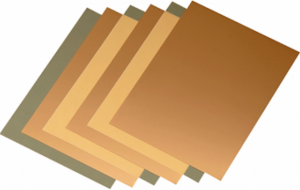
Panasonic PCB material Halogen-Free Series

Panasonic Specialized PCB Materials

As mentioned above, we learned that Panasonic has many PCB material series. Now we let’s delve into Panasonic specialized PCB materials.

Panasonic Halogen-Free & 5G PCB Material: MEGTRON 6 (R-5375)
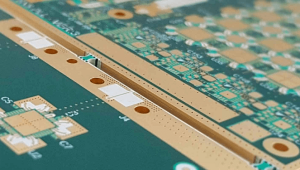
The MEGTRON 6 (product R-5375) series was designed by Panasonic as a halogen-free PCB material. The intention was to solve the engineering problem presented by the new technology in communication infrastructure—the fifth generation (5G) mobile communication technology—that became prevalent during that period.
Panasonic Halogen-Free & 5G PCB Material: MEGTRON 6 (R-5375)
5G technology is an entirely new technology that has faster data transmission speeds and higher data capacity. The entire ICT and communication hardware had to be designed to take on this new technology challenge. MEGTRON 6 is also an excellent multi-layer PCB that perfectly fits to this design requirement to produce circuit boards that are used in the new technology 5G servers, routers, as well as the mobile and computer circuit boards since 5G circuit boards are complex circuit boards with unique design requirements that are required to be met.
The key features that distinguish Panasonic’s R-5375 Board Materials are as follows:
 
ItemPerformance characteristics
Tg (TMA), (°C)210 °C
Tg (DMA), (°C)250 °C
Td (Thermal Decomposition) (°C)435 °C
T288 (Without Cu) (min)>120 min
T288 (With Cu) (min)>120 min
CTE-Y <Tg (ppm/℃)14-16 ppm/°C
CTE-Y, <Tg14-16 ppm/°C
CTE-Z <Tg (ppm/℃)39 ppm/°C
CTE α2 Z-axis: Test Method IPC-TM-650 2.4.24; Condition A (ppm/℃)200 ppm/°C
Thermal Conductivity, (W/m・K)0.37 W/m · K
Volume Resistivity (MΩ・cm)1 x 10⁹ MΩ · cm
Surface Resistivity (mΩ)1 x 10⁸ MΩ
Dielectric Constant (Dk) @ 1Ghz; Test Method IPC-TM-650; Condition C-24/23/503.4
Dielectric Constant (Dk) @ 12Ghz; Test Method Balanced-type Circular Disk Resonator; Condition C-24/23/503.4
Df at 1 GHz0.001
Df at 12 GHz0.003
Water Absorption (%)0.23%
Peel Strength (1 Oz. Cu) (kN/m)0.6 (Cu:H-VLP2) kN/m
Flammability94V-0 equivalent
Sample Thickness (mm)0.75 mm

Panasonic Multi-layer PCB Material: MEGTRON 8
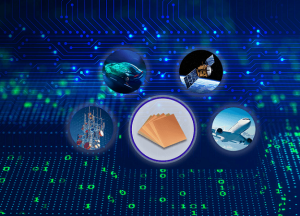
Panasonic has already developed MEGTRON 8, the best material for multilayer printed circuit boards, which is greatly required in current high-speed communication and RF devices.
Panasonic Multi-layer PCB Material: MEGTRON 8
The target data rate that Panasonic aimed to attain with the launch of this revolutionary PCB material was 800 GbE (112 Gbps), PAM4. This was double the pace that was previously possible in the market. The unusualness in the development of the MEGTRON 8 lies in the fact that instead of working with the PTFE-based PCB material, the company uses resin design technology combined with ultra-low dielectric dissipation factor glass fabric and thin copper foil. This has the effect that it enhances the dielectric property of the material; therefore, it has low transmission loss and is capable of handling higher layers in multilayer printed circuit boards.
 
The MEGTRON 8 cut propagation loss by 30% in the 28GHz band. This was lower compared to the MEGTRON 7 (R-5785), which had the lowest propagation.

Panasonic Flexible PCB Material: FELIOS LCP

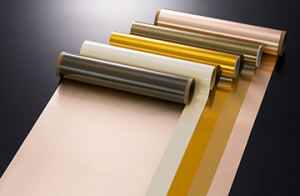
Panasonic has designed FELIOS LCP (Liquid Crystal Polymer) as an ideal material for flexible PCBs that require high speed and low loss signaling, or for applications that require resistance to moisture absorption.
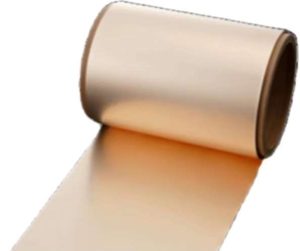
Panasonic Flexible PCB Material: FELIOS LCP
This type of material is common in applications such as antennas and RF circuits, millimeter-wave radar equipment, and medical equipment. It is crafted from specialty pure LCP film (liquid crystal polymer). This gives the material excellent dimensional stability and outstanding copper peel adhesion. This PCB material also has ultra-low moisture absorption and is ideal for moist conditions.
 
FELIOS LCP is also designed with halogen-free materials, which makes it easy to manufacture as it eliminates the extra steps that are required with materials containing halogen materials. This also makes it not release toxic fumes if it catches fire. The new FELIOS R-BM17 low-loss bonding adhesive allows it to support multilayer LCP flex designs.

FS Technology Offers Flexible PCB Manufacturing Services

Understanding the material is the first step; bringing your design to life is the next. At FS Technology, our expertise lies in incorporating these latest technologies into high-performance circuit boards. We offer unmatched flexibility and quality with our manufacturing operations:
  • Prototype & Low-Volume Focus: We serve developers and inventors with an MOQ of 0, making us perfect for prototype and pilot production.
  • Cost-Effective Production: Well-organized production processes enable us to provide goods and products to our customers with highly competitive pricing.
  • Quality Guarantee: We are dedicated to producing the best quality and reliable motherboards.
Ready to build with the best? [Contact our technical team today] to discuss your project requirements and get a quote on PCBs produced with authentic Panasonic materials.

Frequently Asked Questions (FAQs)

MEGTRON laminates offer extremely low dielectric loss, making them ideal for high-speed communication equipment such as routers, servers, and 5G base stations.
The primary difference is in signal loss performance. MEGTRON 8 offers approximately 30% lower propagation loss at high frequencies (e.g., 28GHz) compared to MEGTRON 7. This makes MEGTRON 8 the superior choice for next-generation 112 Gbps (800 GbE) applications in AI and data centers.
Yes. Many Panasonic materials, including MEGTRON 6 and FELIOS FRCC, are halogen-free and meet international environmental standards.
For 5G antennas, the Xpedion series is an excellent choice due to its optimized low-loss properties in the RF range. For flexible antenna structures, particularly in smartphones or automotive settings, FELIOS LCP is highly recommended for its combination of high-frequency performance and moisture resistance.
FELIOS LCP is ideal for flex PCBs because it inherently resists moisture absorption, which is critical for reliability in humid or variable environments. It also provides stable electrical properties over a wide frequency range, has high dimensional stability for precise manufacturing, and is halogen-free.

Related Blogs